4 Mart 2019 Pazartesi

#ResistMuseum: Atatürk's House


I visited three museums so far. As I observed, people love bragging about history, but they do not pay attention to protect it. Atatürk’s House has been opened to visitors as a museum in 1981 and was restored in the past. However, the museum, in 2019, looks like a neglected house. The walls are dirty, some doors are locked and the ground floor is separated for museum personnel. Apart from all these negative factors, I enjoyed the historic and minimalistic atmosphere. The entrance is free. The museum is open everyday except Monday.


Let’s talk about the museum. Atatürk came to Adana 5 times, and he and his wife stayed at this house two times. The house was belonged to Suphi Pasha and turned into a museum. The ground floor, as I said before, is separated for the personnel. The garden is separated for the gift shop and open area for visitors. At the second floor, there are bedrooms and other rooms such as press room, Hatay room, Turkish Revolutionaries (Kuvayi Milliye) room and a room that separated for old guns and money.

In general, I can say that the historical atmosphere can be easily sensed. The decoration of the rooms used by Atatürk is saved. When walking, one can feel the atmosphere. It is a plus point that the museum protected its minimal style. It does not tire you with lots of stuff. Sometimes less is more.

There are pictures of Atatürk when he visited Adana, Mersin, and Hatay. The pages of old newspapers announcing Atatürk's visit are also on display. These pictures enrich the content of the museum. Also, other politicians and soldiers who had contributions to the Turkish War of Independence is not neglected: their names and pictures are on display.


(The Bedroom of Atatürk)

(Sofa)

(Newspapers)

(Old pictures of the house)


PS:

the museum is not open at mondays.


Cinema Museum


Last Monday, me and my friends visited Adana cinema museum. The museum was one of the old Adana houses, then restored by Adana Metropolitan Municipality. It has been opened to visitors on September 2011. As understood from its name, the museum aims to inform people about the importance of Adana in Turkish cinema history. For this aim, many objects are on display: movie posters, cameras, model sculptures, books, old DVDs, stuffs used in the movies and belongings of the artists. The posters feature most of the space and at least one of the artists we saw on the posters is from Adana, which is the main point of the museum. The artists include Yılmaz Güney, Muzaffer İzgü, Abidin Dino, Şener Şen, Orhan Kemal and so on.

(Low budget model sculptures)


Unfortunately, I was not satisfied with the museum. First of all, the content is too general. There is no specification like ‘’Adana’s role in Yeşilçam’’ or ‘’Adana’s role in modern cinema’’. There are many things to see but the building is too small. It looks like a storeroom. All the posters and stuff tire your eyes. Second, there are many things with so little information. We see many movie posters, but what is the importance of these films? Informative texts are not enough, plus there is no translated text for tourists. Third, it is not well designed. Some of the shelves are covered with sticky tapes. The air conditioners do not suit the atmosphere. There is a ‘’library’’ but the shelves are locked. So, visitors are not allowed to read.


Opening a cinema museum in Adana was a good idea, but it was not a well-planned project. Maybe because the entrance is free, the officials do not give enough attention to this museum. For this reason, it does not attract people. Also, the location of the place is hard to find, far away from the city center. I think this museum needs a bigger building and renewals. More books, better model sculptures, and contexts can be added to the museum. There is a big potential behind this idea.


(Adana in history)


(Works of Ali Özgentürk)


(Habamam Sınıfı Illustrations)

(Library -but the shelves were locked)


16 Şubat 2019 Cumartesi

A Review: Adana Museum


In the heart of Adana, there is a step into history: Adana Museum. Adana Museum Complex, with its ​​68,530 square meters service area, was opened to visitors in May 18, International Museum Day. When taking the first step inside the museum, you see the information desk and buy the ticket. It costs only 6 Turkish lira, which is a affordable amount for everybody. In the entrance area, there is also a nice cafeteria and gift shop. Cafeteria is very affordable and its atmosphere is lovely. However, the gift shop is not enough. On your left, there is ‘’Adana in memories’’ panel.

(Adana in Memories)

(Cinevision)


Walking ahead, you see a big cinevision showing the history of Adana in both Turkish and English. You can get pre-information before entering the main museum area. On the right, there is the entrance and timeline panel of Cukurova. The very first section is Paleolithic Age, and other historic ages are  systematically separated. Every historic section, there are 19, has information board both in Turkish and English. The translation of these boards is adequate. Obviously they are made by a professional translator.
(Timeline of Çukurova)


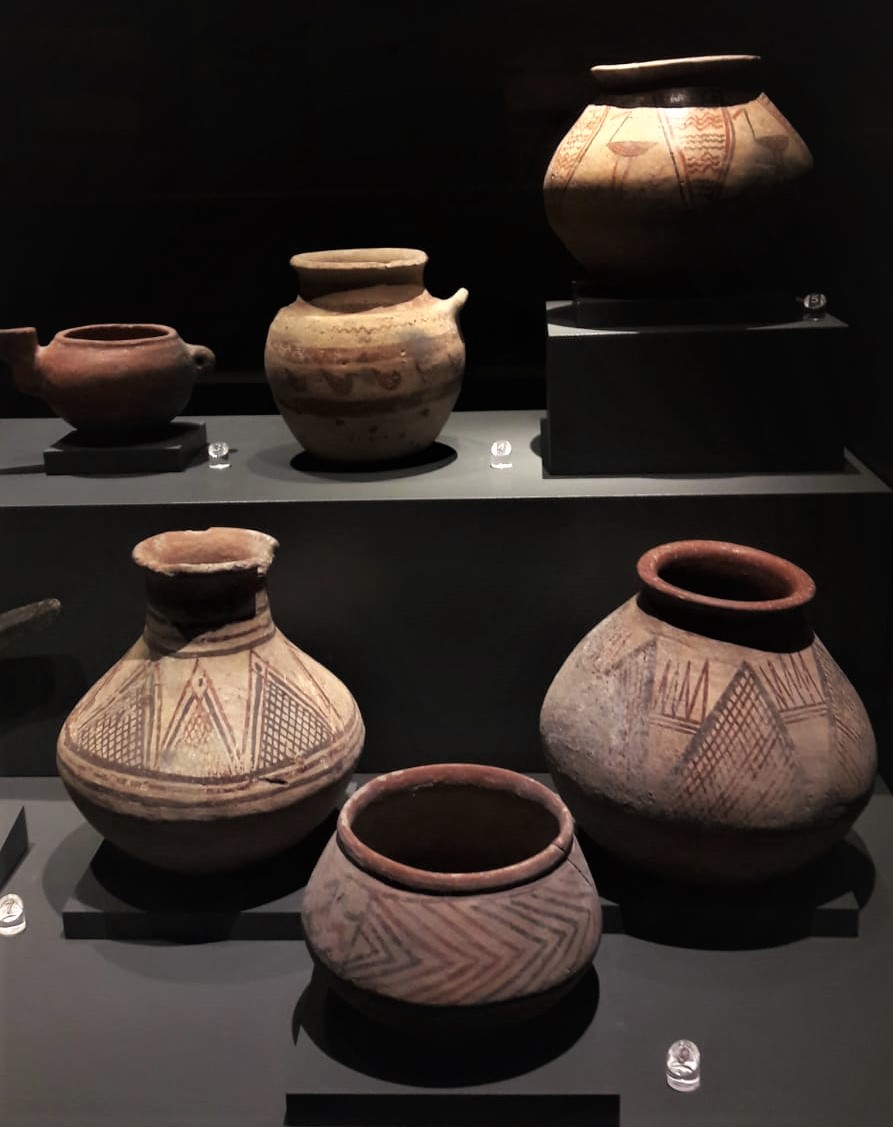
Museum utilizes different sources of information: videos, dioramas, wax sculptures, informative texts and images. Every of them makes your visit more educative and enjoyable. The pieces in the museum -potteries, pots, mugs, tombs, sculptures etc- all dug up from this area -mostly Adana and Mersin. The most interesting section was, for me, mosaic section. The stairs made of glass can be scary if you have acrophobia.
(Potters from Bronz Age)


(Translations)

(Sculptures)

(informative texts - history of glass)

(Diorama)


(Wax Sculptures - Rome)


While visiting, I couldn’t stop thinking about human nature. In every historical era, humans decorated their objects. Maybe because it’s our nature to admire beauty. Second things is about writing. When I saw people used small rocks to write, I realized that it’s also our nature to elucidate. Fortunately we love expressing ourselves, otherwise we would not know so many things about our history.


(Writings on rock)